Venetian blinds: aluminium, wood or faux wood?
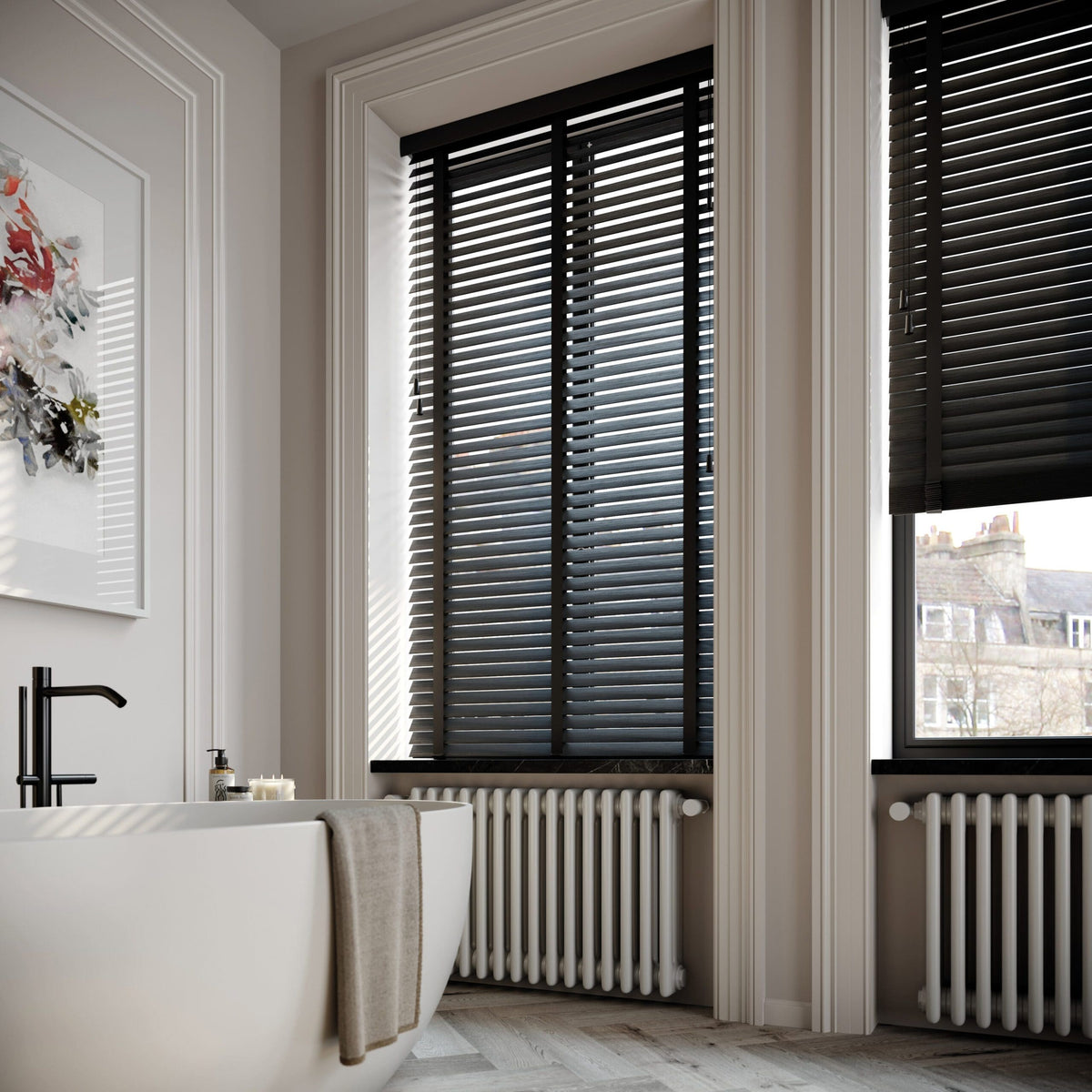
Venetian blinds are the ones with horizontal slats you tilt to let light in, and they come in three main materials. They look quite alike from across a room, but they behave differently once they are up, particularly in a kitchen or a bathroom. Choosing the right material is mostly about the room, and choosing the slat width is mostly about the look. This guide takes you through both.
How a venetian blind works
A venetian blind is a stack of slats held on cord ladders. A tilt control rotates the slats from closed through open, and a lift cord raises the whole blind. That tilting is the great strength. You can close the slats to cut glare, open them to let light in while keeping the view, or raise the blind entirely. No other blind gives you quite as fine a control over light.
Aluminium: slim, light and tough
Aluminium venetians are the lightweight option. The slats come in a range of widths, from slim 16 mm and 25 mm up to wider 35 mm and 50 mm. Slim slats give a neat, almost invisible finish on a small window. Wider slats give a bolder look, with fewer lines across the glass.
Aluminium is easy to wipe clean and does not mind steam, so it suits kitchens, utility rooms and offices. It is also available in a huge range of colours, including finishes that look like wood. The downside is that it can feel a little industrial in a cosy living room, and the slats can bend if they are handled roughly.
Real wood: warm and natural
Wooden blinds bring warmth and texture that nothing else quite matches, and they suit living rooms, studies and bedrooms. We would choose real wood for a dry room. Wood can react to steam and damp, so it is not the best choice for a bathroom or above a kitchen sink. If you love the look but have a damp room, faux wood is usually the better answer.
See our wooden blinds for the range.
Faux wood: the wood look, with fewer worries
Faux wood blinds look like timber but use a moisture-resistant material. They tolerate humid rooms better than real wood and wipe clean easily, which is why they are such a common choice for kitchens and bathrooms. They are a little heavier than aluminium, so very wide blinds need to be planned with that in mind.

Have a look at our faux wood blinds, and our fuller comparison of wooden and faux wood blinds.
Choosing slat width
- Small windows: slimmer slats look in proportion and stack neatly.
- Large windows: wider slats look confident, and you see fewer slats.
- Traditional rooms: slimmer slats suit period features better.
- Modern rooms: wider slats give a cleaner, more architectural look.
Stack height: the thing people forget
When a venetian blind is raised, the slats gather in a stack at the top. Wider slats make a deeper stack, and heavier materials make it bulkier. If the stack sits in the glass area it will cover part of the window, so we allow for it when we measure. In a recess it is less of an issue, and on a small window, a slimmer slat keeps the stack tidy.
Venetian or something else?
If you want a soft look, a roman blind is warmer. If you want no slats to dust, a roller or day and night blind is simpler. If you want a permanent, high-end finish, look at shutters. Venetians win on light control and for rooms where cleaning matters.
Things to know before you buy
- Slats collect dust. Plan to wipe or duster them regularly.
- When closed, a little light can show between slats. For real darkness, see our guide to blackout blinds.
- Cords and chains need to be kept safe around children; see blind cord safety.
- Maximum sizes vary by range, and we confirm them at the survey.
Common questions
Which venetian blind is best for a bathroom?
Faux wood or aluminium, because both cope better with moisture than real wood.
Are venetian blinds good for privacy?
Yes. Tilt the slats so you see out but people outside cannot easily see in. At night with the lights on, close them fully.
How do I clean them?
Dust the slats with a soft duster or a microfibre cloth, and wipe marks with a damp cloth. See looking after your blinds and shutters.
To compare materials side by side, book a free home survey and we will bring samples, or call 01444 635090.

